 Store
Store
When we think of construction sites, we think of productivity, efficiency, progress, and… missing equipment. It’s the last of these thoughts that costs construction companies thousands of dollars annually; the potential for equipment theft, misplacement, or unauthorized use. This is just one way in which construction management teams should consider the use of IoT tracking solutions.
Hugely improving equipment visibility is only the tip of the iceberg of useful applications of tracking technologies. They improve asset tracking, maintenance scheduling, theft prevention, operational data analysis, productivity levels, and more. If used wisely, they could provide incredible benefits to both operational efficiency and corporate profits in the construction industry.
Why equipment tracking matters on site
Construction teams typically lose time and budget in three places:
- Avoidable rentals & idle moves (equipment exists but isn’t found/shared)
- Search time (crews hunting through cribs, trailers, entrances, laydown)
- Theft & unauthorized use (especially after hours or between sites)
Construction equipment tracking does exactly what the name says, it lets you see where tracked equipment and machinery are right now on the construction sites. Equipment tracking is not limited to large-scale construction projects – its potential in small to medium construction sites is particularly significant.
Real-time (or near real-time) location tracking has become the foundation for better planning, safer sites, and smoother handoffs. It’s becoming clear that without equipment tracking, it’s difficult to see everything that’s going on at a construction site.
How construction equipment tracking works?
The value of any tracking solution rests in the data it transfers or collects. A basic IoT-based location solution needs three major layers: hardware, network, and platform. Hardware is the bottom layer, which includes trackers, tags, readers, and gateways.
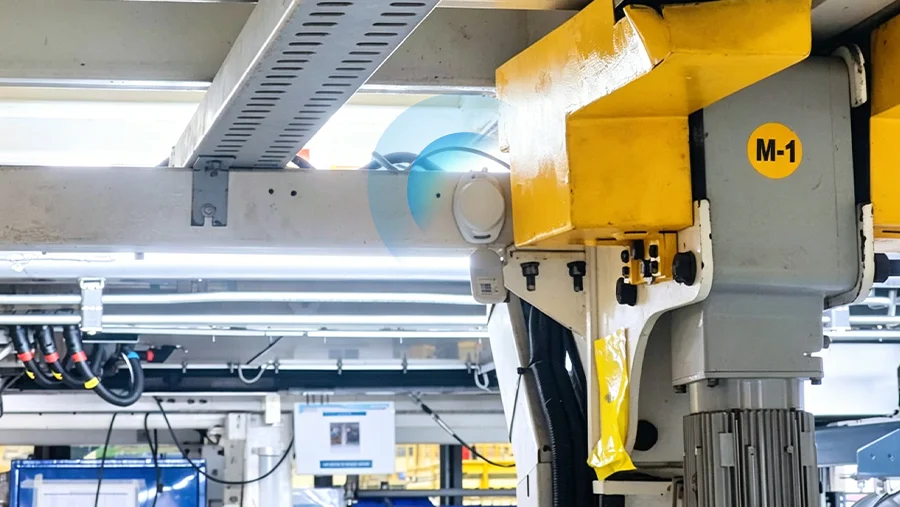
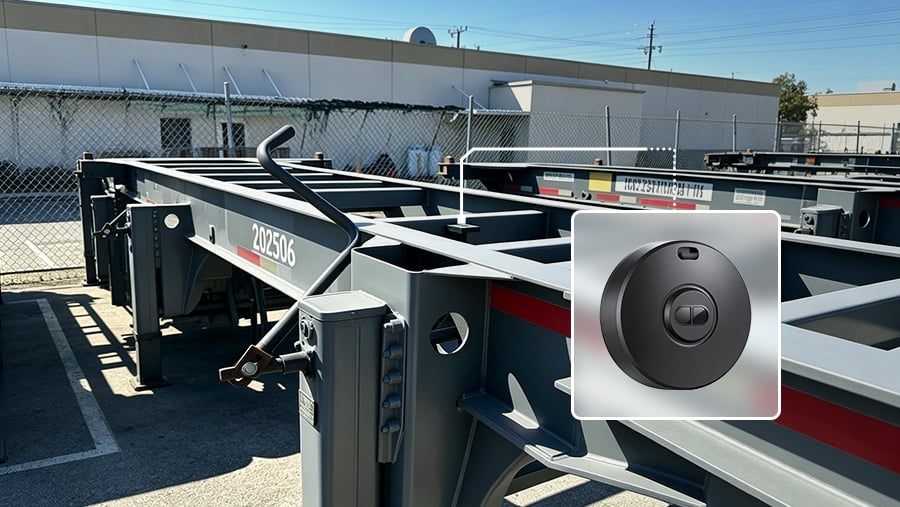
Trackers, or in their smaller forms, tags, are wireless devices powered by BLE, GPS, and other IoT technologies. They can be stationary or mobile, attached to anything from hand tools to excavators.
A gateway collects the tracker signals within its range and pushes the information it grabs to the cloud. The application, located in the cloud, processes the raw data and turns it into whatever it is configured to show.

Comprehensive tracking solutions bring all the data collected from trackers, tags, and gateways and translate them into actionable answers so that you know where the equipment is, who last saw it, whether it’s moving, or whether it’s where it should be.
Decide your required accuracy before picking hardware
You may have assessed equipment tracking solutions in your previous construction projects, or you might be exploring it now for the first time. Either way, accuracy is a variable that you have taken into consideration. Super-precise tracking is not always the best choice, and more precision often comes with a higher cost. You should have a clear understanding of the tracking scenario on your sites before starting planning.
Zone-Level equipment tracking (site/area/building)
For most construction use cases, knowing “this excavator is in the north section of the site” or “these tools are in Building A” is usually more than enough. This is what we call “zone-level accuracy”, meaning that such tracking solutions operate at a site level or area level and they are ideal for knowing which section of a construction equipment is located in.
This approach covers the majority of construction scenarios cost-effectively. It also tackles the biggest time-wasters: crews searching multiple buildings or site sections for an item needed right now.
Precise positioning (pin/floor/corner)
Sometimes, your construction projects may have a need for higher-level accuracy like “at these exact coordinates”. Needed for complex multi-building or underground projects, inventory of high-value equipment, or when exact coordinates drive safety/logistics. This can be achieved with denser BLE infrastructure, UWB, assisted GPS, or combined approaches. It offers more precision at a higher complexity and cost, so use it where it matters.
What is the best construction equipment tracking solution
Once you decide to track construction equipment and tools, the next step is choosing an approach that is reliable, rugged, scalable, and customizable. Sorting through the tracking options available is typically one of the first challenges. Below is an overview of different types of construction equipment tracking solutions.
BLE Tracking
BLE offers a relatively short 150m range tracking, or 300m with long-range modes. It’s ideal for 80% of your construction tracking needs, and the BLE tags are cost-effective $5-30 per tag. MOKOSmart offers various Bluetooth-based IP67/IP68 rugged asset tags with accelerometer, anti-tamper, temperature monitoring, high-temp resistance, and battery life up to 10+ years.
LoRaWAN + GPS: Wide-Area Coverage
LoRaWAN is known for its long, wide coverage and low power consumption, so LoRaWAN GPS Trackers often have a long lifespan of ~5 years. For construction sites, MOKOSmart offers long-strip, mini round, and card trackers, among others. Many units integrate GPS tracking with BLE and WiFi for improved tracking accuracy. Suitable for large construction sites and fleet monitoring.
For wider coverage, you can also integrate Bluetooth asset tags with LoRaWAN tracking. Our LW003 series Bluetooth to LoRaWAN gateway offers a reliable conversion and extends the tracking areas.
Cellular + GPS: Real-Time Everywhere
Cellular is particularly useful in areas where cellular infrastructure exists. It’s also suitable for large construction sites and real-time alerts. However, you have to pay the subscription fee for the connectivity.
MOKOSmart offers Cellular trackers for construction assets and vehicles, and you can also integrate our BLE asset tags with cellular connectivity using our BLE-to-Cellular Gateway.
| BLE | LoRaWAN+GPS | Cellular+GPS | |
| Best For | 80% of tools; indoor/near-building; quick finds | Multi-acre yards, remote sites, breadcrumbing movers | High-value assets roaming between distant sites |
| Avoid When | Sparse open yards with no natural choke points | Dense urban canyons without survey | Poor cell coverage; small tools |
| What To Ask Vendors | Mounting options, ingress protection, battery change workflow, gateway management, OTA updates | Backhaul options, gateway count and placement guidance, hybrid BLE support | Data plan terms, sleep/wake tuning, geofence alert |
This general overview may hold true across many deployments, but every construction project is different. Select your equipment tracking solution by focusing on the deployment factors that matter most to your use case.
The different types of equipment tracking devices
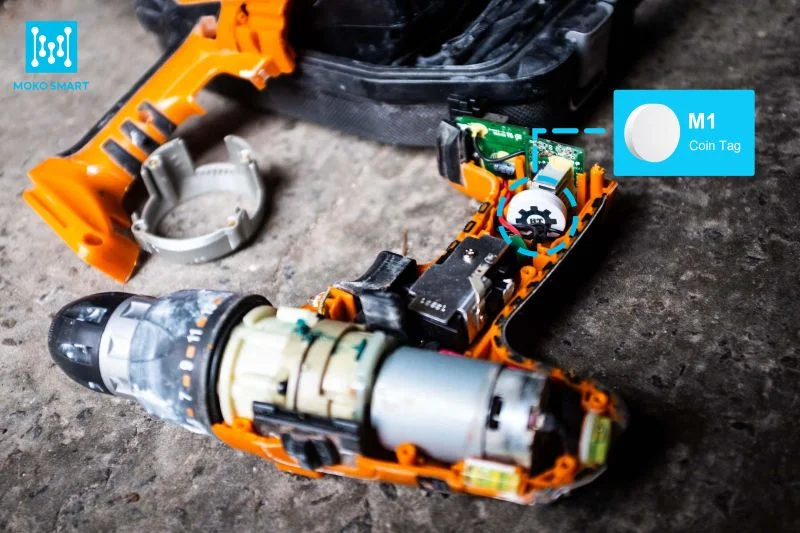
Trackers and tags come in various kinds of shapes and sizes, so you can choose what fits your site’s environment. For most tracking purposes in construction sites, the form factor may not matter as much as the external casing. Smaller tags are a better choice for some equipment that is difficult to attach a tracker to.
Construction tracking devices must be designed to withstand harsh conditions and typically need to be:
- Shockproof
- Waterproof
- Dustproof
- Temperature Resistant
- UV-Resistant
- Tamper-proof
Then, there are sensors, such as accelerometers, temperature, vibration and others that are able to add more capabilities. MOKOSmart provides a variety of rugged Bluetooth asset tags and GPS trackers, so you can keep a close eye on your construction assets.
Use cases of equipment tracking in construction
Construction sites are complex. Even small inefficiencies like lost tools, delayed machinery deployment, or poor resource allocation can ripple through schedules. Tracking systems provide visibility and control so teams can respond quickly and standardize handoffs.
Heavy Machinery Tracking
Excavators, bulldozers, cranes, generators, and similar assets move frequently. Equipment tracking allows construction companies to:
- Locate critical machinery when needed
- Reduce duplicate requests and avoid shuffling equipment unnecessarily
- Understand usage patterns for maintenance scheduling
Tool and Asset Management
Tool movement is constant and a core component of construction operations. Tracking help contractors:
- Monitor tools and materials across buildings and yard sections
- Improve project efficiency by instantly locating tools and materials needed
- Streamline inventory across multiple projects
Equipment and Vehicle Tracking
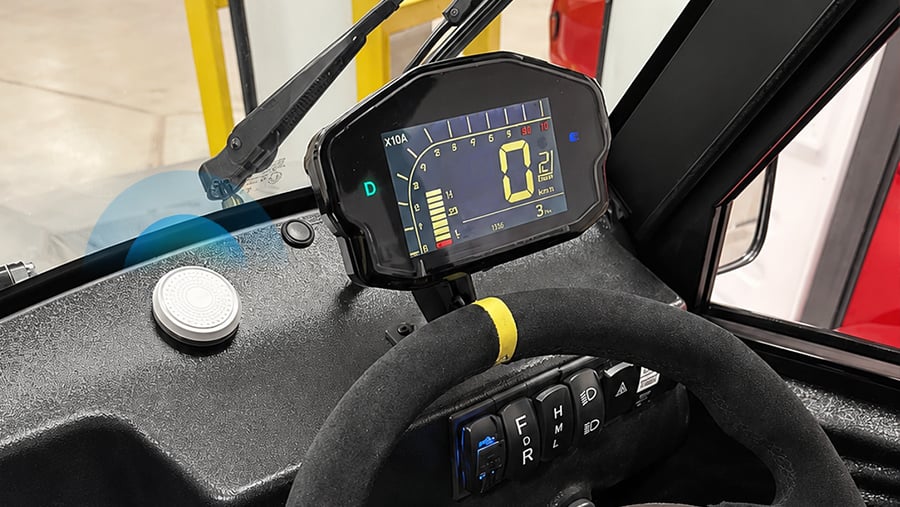
Equipment, however, is not the only thing moving around a construction site. Increased automation and busy logistics have added complexity. Tracking movement helps create a safer construction site and minimize disruptions and maintenance costs.
Worker Safety and Compliance
Construction workers are constantly exposed to hazards and safety risks. Equipment tracking provides insights into machinery operation and safety compliance, allowing construction companies:
- Monitor equipment operation in hazardous areas based on real-time location and usage
- Reduce accidents by tracking machinery movement and preventing unauthorized operation
- Support emergency response and worker safety in critical situations
Optimize your construction equipment with MOKOSmart
IoT-based tracking for construction equipment and tools is a practical way to gain better visibility into your equipment, maximize utilization, and boost operations. Whether you need GPS trackers for roaming equipment or options to track trailers, generators, and small tools, MOKOSmart offers Bluetooth tags, trackers, and gateways that are built for construction environments. To learn more about the different types of MOKOSmart asset tracking devices or discuss samples for evaluation, reach out to our team.
FAQs about construction equipment tracking
Do I need GPS on everything?
No—tag broadly for visibility. Add GPS only to high-value movers or theft targets that roam between sites.
How many gateways do I need?
For BLE, cover places where people naturally hunt or where assets cross boundaries—entrances, stair cores, and gates. For LoRaWAN, a small number of well-placed gateways can span a yard; verify placement with a simple site walk and signal checks.
What if there’s no cellular coverage?
Favor LoRaWAN + BLE. Buffer data and forward when back in range or during drive-bys.