 Store
Store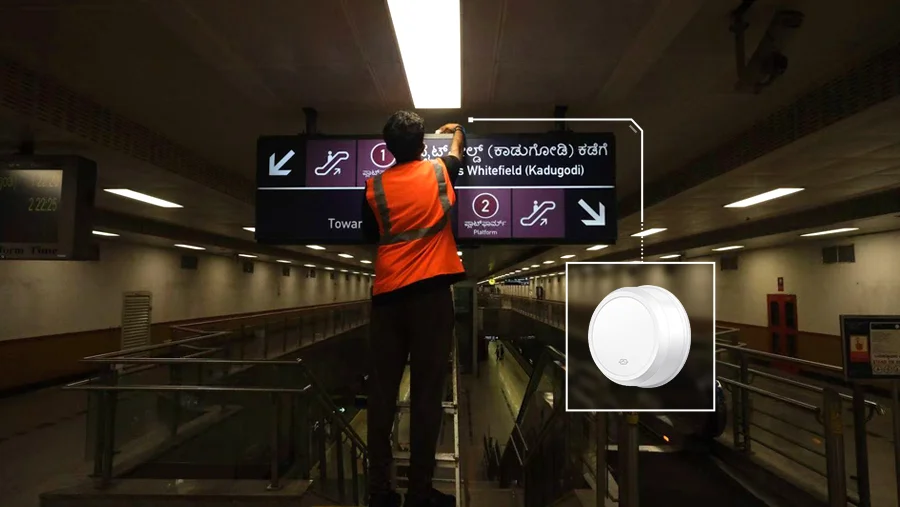
Navigating within an unfamiliar public area would be quite challenging, especially finding routes to a specific destination. Traditional indoor navigation methods, such as relying on physical signs or manual guidance, could be highly dependent on the signal availability and knowledge of the person providing the way. Under such context, an IoT-enabled navigation solution steps in with its capability to shape a visual map and guide users along a clear route to their intended destinations.
Challenge
The vast campus of a university in Poland presents a significant challenge for students and staff, particularly for new arrivals. Also, a private hospital in Malaysia also shows great difficulties for patients to find the precise locations of specific departments or pharmacies. The complex layout of these buildings, characterized with numerous corridors and multiple floors, often leaves individuals confused. This may lead to considerable wasted time as they need to wander around to find the correct way to their destinations.
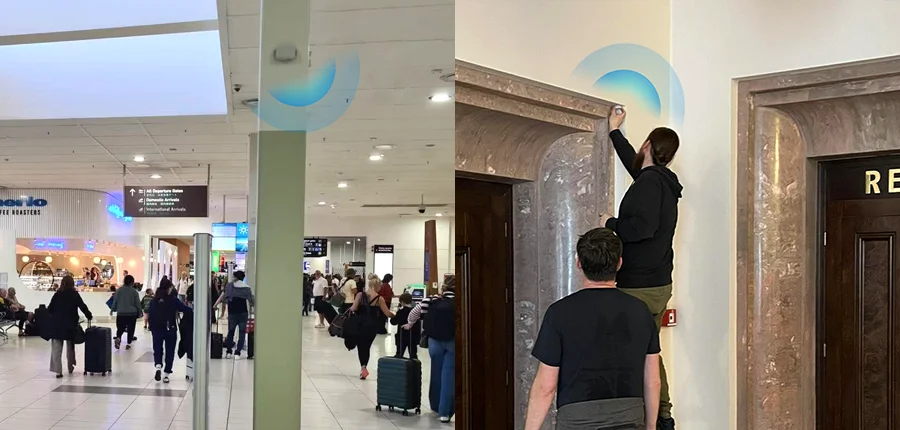
On the other part of the globe, an airport in Australia presents extremely challenging for pedestrians to navigate, because of their multiple terminals and service facilities. First-time travelers or those visitors who have been to the airport before often face difficulties in finding their ways to boarding gates or other essential services. This may result in long queues at information desks or even missed flights, thereby generating unpleasant travel experiences.
Similarly, a metro station in India is also confronted with a similar challenge. This station serves a large number of commuters every day. Its complex network of platforms, tunnels and exits could be extremely complicated, especially during peaking hours when crowds surge in. Passers-by including tourists and local residents, frequently find themselves lost. This not only causes inconvenience, but also exacerbates congestion within the station.
Solution
To effectively address these problems, IoT-based indoor navigation solutions have been adopted. These solutions rely on the strategic placement of Bluetooth beacons at key locations throughout the facility, such as corners, intersections and significant waypoints. These beacons serve as essential reference points, enabling the precise location of key landmark points and the creation of overall visual maps. For example, at university and hospital, beacons could be strategically installed at building entrances and corridor junctions. Similarly, within the bustling environment of an airport in Australia, beacons are positioned near gates, baggage claim areas, and information counters. While in metro stations, beacons are located on platforms, beside escalators, and at exit points.

Once these beacons have been well deployed, they function as transmitters and emit periodic BLE signals, which could be detected by nearby smart devices. To utilize this indoor navigation system, users simply need a smart device equipped with a customized application and Bluetooth permission. As a user walks through the area, the application will scan for these BLE signals continuously. By analyzing the RSSI, the application determines the relative strength of each signal for precise location of the user. Such location data is then seamlessly integrated to the existing map. After users input their destinations, the visual map will provide clear routes. On the way to their destinations, the map will update current location in real-time in case to prevent possible errors until arriving.
Via such clear and complete mapping information, whether a student is trying to find the classroom or a commuter is navigating through the metro station, the application can guide them to an efficient path, significantly minimizing searching time. By leveraging the power of IoT technology, we have greatly addressed the challenges faced in different environments, providing a seamless and efficient navigation experience.
Featured Products
H2 Navigation Beacon, a wayfinding anchor powered by Bluetooth Low Energy technology. With the white color and inconspicuous circular case, as well as the 1000mAh battery capacity which can reach to 5 years lifetime, H2 can be ideally realize the indoor wayfinding.
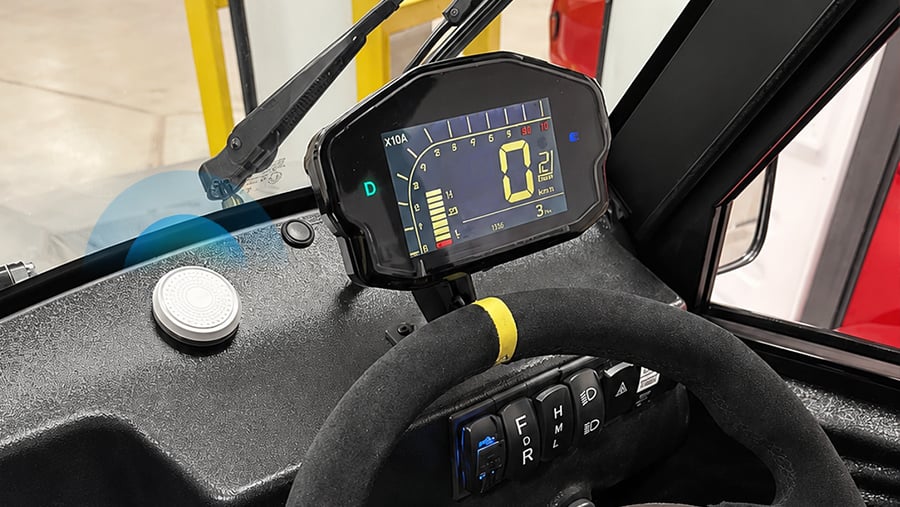
M3 Industrial Beacon is designed to provide high-level positioning and tracking services, especially for the industrial sector. Thanks to its ultra-low power consumption, the beacon guarantees outstanding battery lifetime. Its waterproof, anti-collision, and temperature-resistant design guarantees exceptional durability.
L01A BLE Anchor Beacon, a Bluetooth technology based and long battery life guaranteed tag, is ideal for wayfinding solution and RTLS in the exhibition hall, airport and etc. Its round shape design makes it unobtrusive when used as location anchor, and its IP67 waterproof design enables it adaptive in both indoor and outdoor situations.