IoT in Healthcare
No one enjoys spending hours waiting to see the doctor, flipping through old magazines, or mindlessly scrolling on their phone. But what if there was a way to change this unpleasant experience? This is not a far-fetched dream, but rather the potential of the IoT in healthcare. Picture this: your health metrics are constantly monitored by IoT healthcare devices. Your doctor can remotely check your vitals, medication usage, and more – no more scheduling appointments just for a quick check-in.
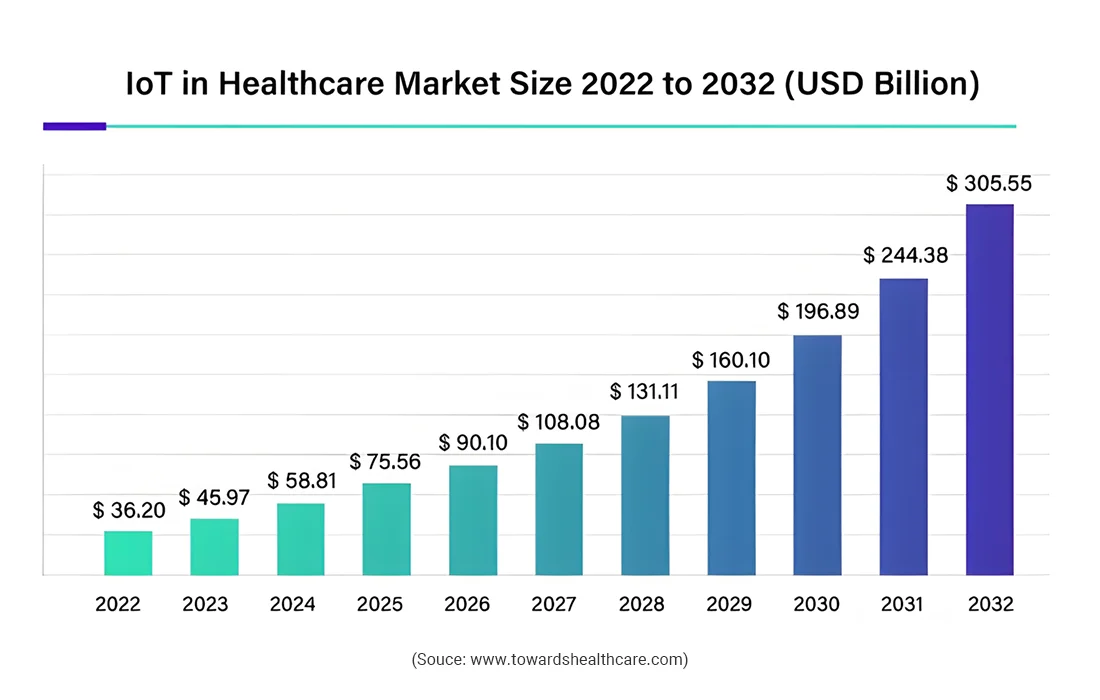
In 2023, about 74% of physicians in the US were using IoT telehealth services. That means a lot of people skipping the waiting room time! Meanwhile, The global IoT healthcare market is exploding, growing from about $45.97 billion to a projected $305.55 billion (2023 – 2032). It’s like healthcare is finally getting with the times and is overdue for an upgrade!
The Internet of Healthcare Things (IoHT), also called the Internet of Medical Things (IoMT), is essentially a network of connected medical devices and applications. It gathers data in real-time through healthcare IT systems. At its core lies medical devices equipped with Wi-Fi or other wireless techs, forming the backbone of IoHT. These components work together to gather and transmit crucial health data.
IoHT is the adoption of IoT applications, devices, software, and technologies in healthcare. It also defines the protocol through which the medical sensory software, application, or devices communicate the recorded patient’s information to the cloud server network.
The idea of Healthcare IoT can be traced back to the early 2000s, when electronic medical records (EMRs) and telemedicine first began to emerge. During the COVID-19, it really took off and played a crucial role in health monitoring. As IoHT continues to evolve, it promises to further reshape how healthcare is provided and managed.
IoT Medical devices work together in an IoT environment to obtain data from a patient, communicate data with one another, analyze and produce results. The architecture of a HIoT network consists of its topology, that is, the optimal arrangement and connection of its components in a healthcare environment.
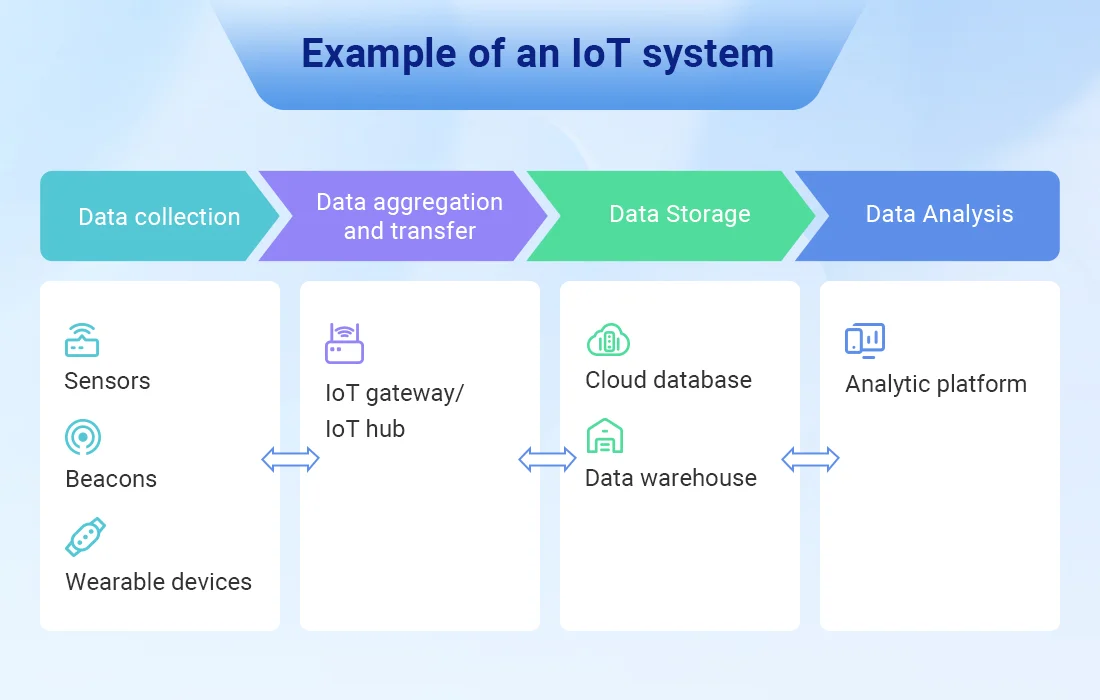
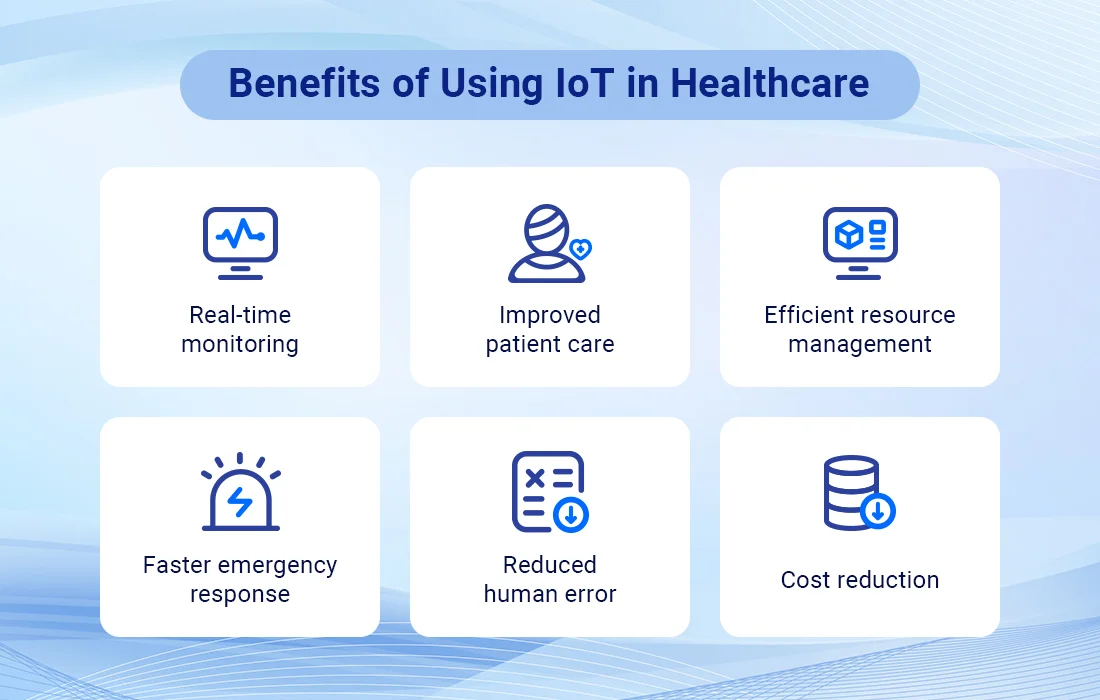
The IoHT describes the connected ecosystem of medical devices and applications that collect and share health data. By leveraging IoHT technology, healthcare providers can realize numerous benefits, including:
The IoT smart healthcare has made significant strides in the healthcare industry. With applications spanning from patient monitoring to virtual assistance, the scope of IoT in healthcare is vast and diverse. Here, we will talk about seven common use cases of IoT in healthcare.
Staff Protection
Probably the most popular smart healthcare use cases are staff protection systems, combining various smart safety devices. They collect comprehensive data about staff well-being and workplace risks and then send it to the cloud. The measurements provided can be used to assess safety conditions, select the right protective measures, and implement necessary actions to enhance staff security (i.e., safety management).
Some examples of such healthcare IoT devices are our H3 Pro Button and LW006 LoRaWAN Smart Badge.
Patient Visibility and Care
Another type of IoT device in healthcare and an element of patient monitoring are patient monitoring devices. Just like staff badges, they should be worn on patients’ wrists or necks to collect data specific to patients; from vital signs and movement patterns to physiological indicators and overall patient condition.
By wearing our badges or wristband beacons, the relevant staff can be distributed in time for emergency help and quickly locate the position of the patients. MOKO’s W7 Medical Wristband and W3 Pro Smart Wristband can serve as good examples.
Medical Equipment Management
Just like patient monitoring, there are IoT asset tags available to attach to medical equipment to medical equipment to track their location and occupancy status. Hospitals can equip high-value or location-critical equipment, such as wheelchairs, infusion stations, smart beds, and defibrillators, with Bluetooth tags. Such asset tags will prevent misplacement and save time unnecessarily searching. Thus they can also identify underutilized equipment in order to reassign resources and redistribute them to other areas.
For example, using MOKO’s M1P LED Tag and UT1 Paper Asset Tag on wheelchairs or medicine stocks. They help provide location insights on each piece of assets.
Drug Management and Compliance
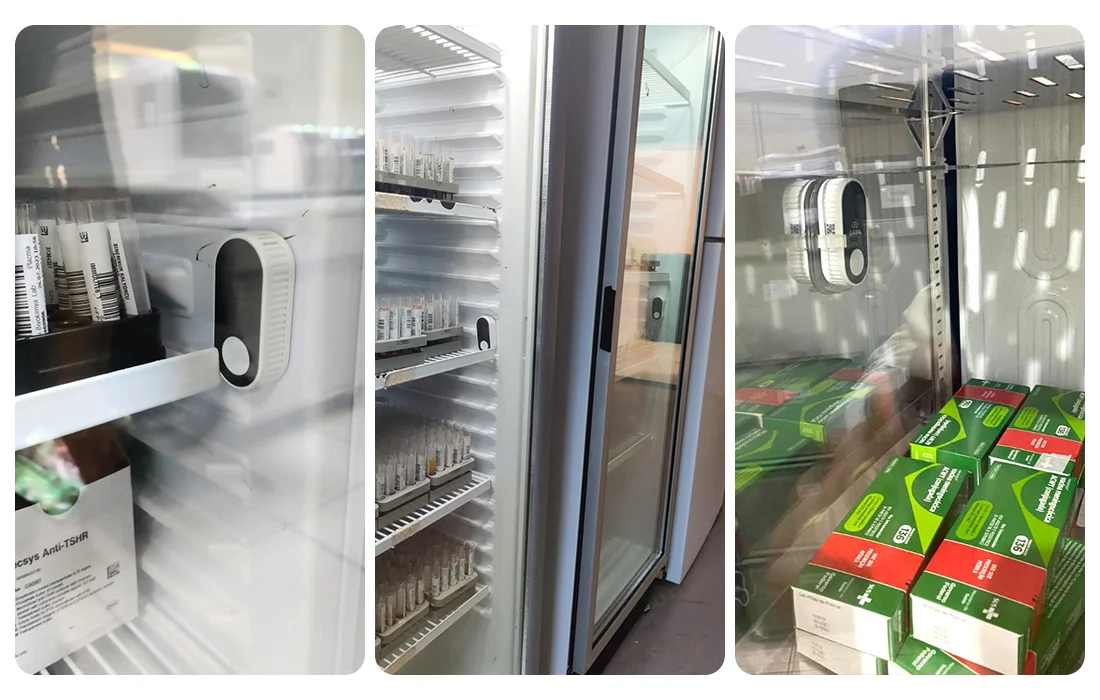
The use of IoT devices is mainly focused on temperature-sensitive drug monitoring and drug door open/close monitoring, as well as sending notifications for drug taking reminders. Healthcare providers can collect data on temperature-sensitive drug storage and monitor drug cabinet access. This data enables healthcare professionals to ensure medication integrity and patient compliance.
For instance, MOKO’s H4 Temperature and Humidity Sensor and S03D Door Sensor are used to monitor drug storage temperature and track medication fridge access. As a result, healthcare providers can track temperature-sensitive drug storage and collect data on drug cabinet access.
Real-time Emergency Response
Instant help can sometimes save a life, by pushing the panic button, healthcare can be provided in time. The smart emergency response systems can provide faster and more efficient response. These emergency alert devices are worn by those at risk of accidents but do not require constant care – the elderly prone to falls, pregnant women, or those with conditions like vertigo.
Beyond just monitoring, these systems can also perform a vast number of tasks: They are applied to patient tracking, emergency dispensing, medical resource allocation, real-time communication, etc.
When an emergency happens, a simple press of MOKO’S B3 emergency button sends an immediate alert for help.
Indoor Positioning and Navigation
Technological innovations also offer a promising future in indoor positioning systems for healthcare purposes. Some hospitals have already adopted indoor navigation systems. Such systems are autonomous and cut hospital staff’s navigation and coordination costs.
Bluetooth-based iBeacons are at the heart of these systems, providing real-time, turn-by-turn directions and contextual notifications based on a person’s location.
In addition, smart healthcare also uses positioning systems for patient tracking, equipment locating, and emergency response.
Environmental Monitoring and Control
Typically, healthcare facilities use manual intervention to control the hospital environment. The adoption of IoT sensors enables them to get precise, real-time data on environmental parameters, including air quality, temperature, humidity, and infection control parameters.
In addition to gathering environmental data, monitoring systems can also automatically adjust conditions to meet specified safety and health standards.
The Internet of Medical Things includes a wide range of connected devices and technologies facilitating healthcare delivery and management. IoMT solutions can be categorized based on their intended use case and deployment environment:
In-home IoMT - Devices used in or around a patient's home environment.
– Personal emergency response systems (PERS) like panic buttons, emergency buttons
– Remote patient monitoring (RPM) devices such as blood pressure monitors, pulse oximeters, glucose meters
– Telehealth virtual visits
Wearable IoMT - Also known as on-body IoMT, these connected devices are worn on the body.
– Consumer wearables like smartwatches, fitness trackers, ECG monitors
– Medical wearables like glucose monitors, pulse oximeters, smart inhalers
– Implantable devices like pacemakers, insulin pumps, neurostimulators
– Ingestible sensors
Public/Community IoMT - Devices dispersed throughout a region to increase healthcare access.
– Emergency response intelligence
– Point-of-care kiosks
– Mobility services to patients’ vehicles
– Air quality sensors
– Disinfecting robots
In-hospital IoMT - Connectivity within hospitals for advanced patient care and operations.
– Smart hospital beds
– Patient flow management
– Asset trackers using Bluetooth or RFID tags
– Mobile medical cameras
– Environment and energy monitoring
– Hand hygiene monitoring
– Waste management systems
Across home, wearable, public and clinical settings, IoMT devices are enabling ubiquitous health data collection and real-time monitoring to enhance care delivery models.
Despite the extensive benefits IoT in healthcare boasts, successful implementation requires addressing several challenges:
IoHT technology will drive healthcare towards Healthcare 4.0 and smart hospitals, as IoHT technology continues to evolve. Automated and digitalized medical facilities are what these are. With all of this, everything will be streamlined and digitized – from disease diagnosis to patient monitoring.
The good thing is that the adoption of new technologies such as Bluetooth and WiFi widens the use scenarios for IoHT devices. However, one thing that manufacturers have to work on is the standardization of the industry. Having interoperable devices will propel the widespread adoption of IoHT devices. And when combined with strong security architectures, there is no limit to how high this technology can take us.
Company
IoT Services


MOKOSMART
As a renowned loT devices solution provider, MOKO SMART can ensure that your project is leading the industry. Choose us to provide you with OEM or ODM services.
CONNECT WITH US
Copyright © 2026 MOKOSmart #1 Smart Device Private-Label Solution in China

 Store
Store