 Store
Store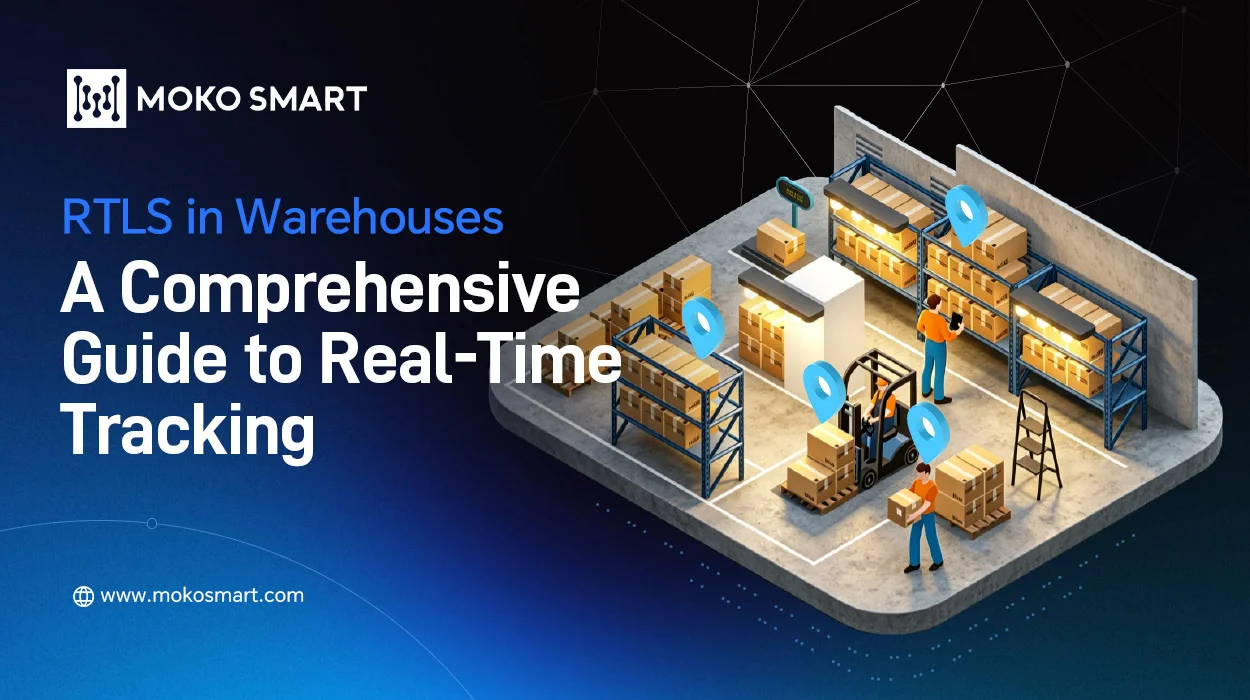
For more than a decade, warehouses have relied on Real-Time Location System (RTLS) solutions to optimize asset visibility, personnel safety and supply chain agility. Its original use and still one of the most common is for warehouse asset tracking. But that’s only the beginning of how warehouses can put RTLS to work.
Effective warehouse tracking should go beyond the simple question of “where’s our equipment?” Today, a growing number of warehouses are tapping into RTLS to address safety and efficiency goals. They’re using RTLS to monitor and optimize the flow of goods and workers, to safeguard high-value inventory throughout their facilities, and to enhance protection for their staff.
So, what exactly is RTLS? What benefits does it offer? And what key steps should you consider if you want to implement RTLS in your warehouse facility?
What is RTLS in warehousing
RTLS in warehousing is used to provide immediate, continuous tracking of inventory, equipment, and staff within all types of warehouse and distribution environments. While the underlying locating technology differs from satellite-based trilateration, it is best understood as a type of high-precision “indoor GPS” for warehouses. Beyond simply identifying the location of tagged assets and staff, a robust RTLS that easily integrates with existing Warehouse IT solutions enables a wide range of visibility. MOKO’s RTLS hardware solutions enable thousands of use cases via the integration of various BLE or UWB tags, badges, and gateways with leading RTLS platforms.
How does RTLS in warehouses work: the technological components
Put simply, an RTLS is a coordinated real-time location system of hardware, software and connectivity protocols. Here is a breakdown of how these components work together to provide real-time visibility.
1. Hardware
RTLS hardware is the most visible part; it may include tags, badges, sensors, and equally important – gateways, anchors, or readers. Tags are attached to forklifts, pallet jacks, or reach trucks to enable tracking, while gateways collect location data from the tags and transfer them to the RTLS platform. Tags can vary depending on the technology used, but they should be affordable at scale.
2. Software
The RTLS platform acts as the “brain,” integrates all data collected by tags and hardware infrastructure and turns it into actionable insights. A modern RTLS warehouse software often provides real-time dashboards, analytics, and seamless integration with other WMS or ERP systems.
3. Connectivity Options
Behind every functioning RTLS is the invisible connectivity technologies that ensure reliable data transmission between hardware and software. The choice of connectivity like Bluetooth Low Energy (BLE), Wi-Fi, or Ultra-Wideband (UWB) is crucial, as it determines the system’s accuracy, battery life, and overall cost. To help you choose the right fit for your facility, we will explore and compare these options in detail in the following section.
Tracking technologies behind warehouses RTLS
In a warehouse context, it is rarely about what works but what works best for your constraints. RTLS systems leverage several different technologies depending on the specific use case. Each wireless technology offers unique strengths. Here are the most common RTLS technologies used in modern warehousing:
Bluetooth Low Energy (BLE)
Bluetooth has become the go-to technology in recent years and continues to see strong adoption across warehouse tracking applications. There are many use cases in which BLE asset tracking proves highly effective. BLE tags can operate for several years on a single coin-cell battery, meaning that companies do not need to invest heavily in frequent maintenance or replacements. BLE-based RTLS uses low-cost tags that broadcast unique Bluetooth signals, which are picked up by fixed gateways and sent to a central platform. However, the fact that Bluetooth is a short-range technology requires a fairly dense grid of gateways for reliable coverage. Positioning accuracy scales from a few meters to sub-meter, particularly when using advanced techniques like Bluetooth AoA. Overall, most companies would do well to consider Bluetooth as their primary solution, especially as it is cheap and easy to deploy.
Wi-Fi
Wi-Fi used to be a highly accessible RTLS solution in warehousing due to its reliance on existing network infrastructure, low upfront investment, and broad facility coverage. Wi-Fi-based RTLS uses tags equipped with Wi-Fi transmitters that send signals to the facility’s existing access points. Typical accuracy ranges can be within 5–10 meters, though this may improve with a denser network of access points. However, as Wi-Fi bandwidth is increasingly consumed by other communication demands, many operations should be shifting toward more purpose-built solutions.
Ultra-Wideband (UWB)
UWB is often considered the most precise technology for asset tracking. It offers exceptional accuracy to within 30 centimeters, making it ideal for applications where exact location data is critical. The tradeoff is the higher cost of tags and infrastructure, as well as greater power consumption compared to BLE and Wi-Fi. UWB is also notably resilient, with signals that penetrate obstacles well and resist interference effectively. UWB RTLS is the go-to choice for high-precision use cases, and with reason. That said, with the introduction of Bluetooth 6.0 Channel Sounding offering sub-meter positioning accuracy, it seems likely that UWB’s dominance in the high-precision sector will be challenged in the near future.
Accuracy levels of real-time location tracking
Warehouse requirements for continuous visibility often vary. In some cases, it’s enough to know an asset is within a general zone; in others, you need pinpoint visibility down to a specific rack location. Below is the hierarchy of RTLS accuracy levels, along with the technologies that support each.
Zone-Level Locating
Zone-level locating tells you that a tag is somewhere within a specific area or functional zone, but not with meter-level precision location. Using Wi-Fi or BLE-based RTLS, you can deliver this mode. It’s useful when you just need high-level visibility, for example, verifying that a critical piece of equipment is somewhere in the correct department, staging area, or aisle. This is ideal for many common logistics workflows without the need for high-density infrastructure.
Precise/Sub-zone Level Locating
This level of granularity is the gold standard for warehouse digitalization, sometimes known as sub-zone, aisle, or bin-level locating. The system identifies the position of a tag on a detailed facility map down to a specific rack, bin, or position in real time. High-precision technologies like BLE AoA or UWB can deliver this granularity. For high-density storage areas or multi-level racking systems, precise locating enables the system to distinguish between exact positions. At this level, advanced workflow automation like automatic generation of pick tasks and put-away optimization becomes a reality.
Estimation vs Precise Hybrid
A hybrid RTLS approach is probably where most warehouses land: using estimation-based locating (zone or aisle-level) for general coverage, and bin-level locating for high-value zones (cold storage, hazmat areas, high-security zones). This strategy provides maximum flexibility, allowing you to scale the system as your operational needs evolve from rough to fine tracking.
Benefits of an RTLS system in warehouses
Warehouses face business issues similar to any other large logistics operation. RTLS solutions can offer a range of advanced capabilities that are highly beneficial to warehouse operations, assets, equipment, staff safety, and space utilization. Specifically, these benefits include:
1. Improve Asset Tracking and Management in Warehouses
Asset visibility risks, including misplaced equipment, unauthorized removal of inventory, or unplanned downtime of critical machinery are a constant threat within large-scale warehouses. RTLS asset tracking streamlines the monitoring and management of warehouse assets and inventory movement with warehouse-wide visibility. By using asset tags on pallets, containers, or individual items, RTLS systems provide real-time visibility into inventory location, reduce search times, improve accuracy, and streamline workflows between receiving, storage, picking, and shipping.
Examples of how RTLS can improve asset tracking and management include:
- The ability for warehouse managers to locate any tagged asset or equipment instantly in the event of an urgent operational need or active maintenance schedule.
- Trigger alerts protecting high-value equipment from unauthorized use or removal using geo-fencing and access control system integrations.
- Monitor asset utilization rates for more informed purchasing and rental decisions.
- Create audit trail reports that track when and which staff members have interacted with a particular asset or inventory item.
RTLS Solutions for Equipment Visibility and Control
One of the primary benefits of RTLS in busy warehouse environments is real-time asset tracking. Knowing exactly where your warehouse assets and equipment are at all times is crucial information for any facility. An RTLS asset tracking solution offers real-time visibility by instantly and accurately locating or positioning any tagged equipment and directing the fastest path. For example, RTLS technology enables warehouse managers to monitor the real-time location of forklifts, pallet jacks, and other mobile equipment from a mobile device or in-facility display monitor.
RTLS Solutions for Inventory Accuracy and Management
Warehouse operators also enlist the help of RTLS asset management solutions when it comes to some of the most valuable inventory in a distribution facility. Designed to enhance inventory accuracy, MOKO’s asset tracking devices offers peace of mind for staff and managers overseeing high-value or time-sensitive goods. The system triggers alerts and control measures when inventory is approaching unauthorized zones or points of egress, automatically notifying security personnel and logging all movement events. Similarly, cold storage facilities and controlled inventory environments have sought RTLS asset management solutions to keep both equipment and inventory accounted for at all times.
2. Enhance Worker Safety and Monitoring
In modern warehousing, real-time visibility into worker location is a critical safety concern, and RTLS greatly helps in this. With RTLS safety solutions, warehouses can monitor lone workers or personnel operating in high-risk zones. For instance, a lone worker operating in remote storage areas wearing an RTLS badge can trigger an alert if they remain stationary for an unusual period of time. This effectively acts as an “invisible safety net” helping prevent workplace accidents and delayed emergency responses. In facilities where forklifts and pedestrians share the same floor space, proximity alert systems are an RTLS application designed to prevent collisions. If a forklift has entered a pedestrian-only zone, the system alerts the operator and supervisors immediately.
3. Streamlines Operation
Beyond the tracking of assets and workforce, RTLS has a direct positive impact on the day-to-day experience of warehouse operations. RTLS solutions can be utilized for common warehouse problems and bottlenecks that lead to operational complaints, including:
- Long order processing and fulfillment times.
- Overcrowding at receiving docks, picking stations, and dispatch areas.
- Delayed or rescheduled shipments due to inventory not being where it is expected.
- Not having enough available equipment or workforce capacity to meet peak demand periods.
Warehouse inventory and equipment are in near-constant motion. Between receiving, putaway, picking, packing, and shipping, there is a lot of room for unnecessary delays or error. By implementing an effective real-time location solution, departments can increase fulfillment accuracy and reduce operational stressors throughout the supply chain. This efficiency translates directly to the customer experience. RTLS doesn’t just manage assets; it secures customer retention and future business by ensuring near-perfect delivery performance.
Implementing RTLS technology in warehouse facilities
Selecting and deploying an RTLS in a warehouse is an important investment that involves technology, process optimization, and personnel. An ideal RTLS solution should do more than solve the current problems but also offer the flexibility to scale from basic location tracking to advanced contextual awareness. The following are key considerations and steps MOKO recommends for a successful implementation:
Secure stakeholder buy-in
The support from all stakeholders and your leadership team is the foundation on which a successful RTLS deployment begins. Engage floor managers and workers by outlining the benefits each department will gain, citing case studies or pilot data from other warehouses if possible. Simultaneously, highlight to executives that introducing an RTLS solution can significantly boost operational efficiency and prevent costly asset losses.
Define use cases and goals
Now comes the assessment and outlining of ultimate goals that you aim to achieve with the RTLS system. Ensure that you choose an RTLS solution that aligns with your warehouse’s coverage and complexity. The key is to match precision to the task with various accuracy levels (zone-, aisle-, bin-level) and update latency requirements: zone presence for basic asset location, aisle-level for picking optimization, bin-level for high-value storage or hazmat areas.
Below are some of the common goals warehouses aim to achieve with RTLS implementation:
- Decrease inventory and equipment search time
- Reduce the number of lost or misplaced assets
- Minimize order fulfillment and processing time
- Lower expenditures on equipment maintenance and rentals
- Reduce workplace accidents and safety incidents
- Improve storage space utilization and traffic flow
Selecting the right RTLS technology
In RTLS, there’s no universal answer and the right RTLS often comes down to a balance between precision and cost. As you know what you want to achieve, you can focus on the figured RTLS tracking technologies.
BLE is the workhorse of warehouse RTLS. Low power, reliable indoors, decent accuracy for most use cases. Needs a gateway grid but deployment is pretty straightforward. Most warehouse tracking projects start and end here, and honestly that’s fine for the majority of use cases. You can start your RTLS journey with MOKOSMART × Navigine RTLS Development Kit.
UWB is the precision option. Sub-meter accuracy, great for high-value assets or safety-critical applications like forklift proximity alerts. Vendors like Quuppa, Sewio and Pozyx build serious solutions around this. More expensive to deploy but the accuracy is genuinely in a different league.
Hybrid systems combine BLE and UWB and this is probably where most mid-to-large warehouses should land. Use BLE beacons for broad asset and personnel visibility across the floor, layer in BLE AoA or UWB for zones where precision actually matters. Covers both bases without blowing the budget on full UWB deployment.
Evaluate system capabilities
Beyond tracking technology, the overall system capabilities play a critical role in long-term success.
- Worker Safety Features: Worker safety adds another layer. Fall detection, lone worker monitoring, emergency alerts — that’s critical for cold storage, chemical handling, anything with elevated risk. Some platforms bake this in, others treat it as an add-on. Worth clarifying upfront.
- Scalability: A key factor to ensure the system to expand from pilot zones to facility-wide deployment.
- Integration: Platform integration matters more than we realize. Your RTLS needs to talk to your WMS and ERP, handle geofencing alerts, dwell time flags, utilization reports.
- Ease of use: The RTLS system’s user interface for staff should be intuitive and simple. It’s better for workers and supervisors to use in daily operations without requiring extensive training.
- Vendor support and experience: Look for reliable vendors with track records in warehousing and logistics. It’s better if they can demonstrate successful deployments in warehouses of similar or large scale. Comprehensive onboarding, training and technical support are also critical, especially during the go-live phase.
Understanding RTLS cost structure
Successful RTLS implementation in a warehouse facility often involves both upfront capital investment and ongoing operational costs. Key budget items to account for include hardware (tags and gateways), installation, software, integration and maintenance.
The total cost of ownership (TCO) has decreased significantly as technology has matured. For instance, tag battery life has improved a lot and energy harvesting technology is applied to tags like MOKO’s M10 Ambient Light Harvesting Asset Tag. Many BLE tags now operate for 3-5 or even 10 years without replacement. This longevity makes large-scale tracking more sustainable and cost-effective than ever before, lowering the total cost of ownership.
To balance the initial investment, consider the Return on Investment (ROI). When properly implemented, an RTLS system can often pay for itself within a few years by driving significant operational savings.
Why choose MOKOSmart’s RTLS hardware
Real-Time Location Systems are no longer a “nice-to-have” innovation but a core infrastructure in modern, data-driven warehouses. As RTLS technology continues to evolve, its role in supporting a smarter, safer, and more efficient warehouse will only expand. Businesses that embrace RTLS with clear goals and strategic deployment are better positioned to deliver consistent outcomes. By choosing MOKOSmart, you gain more than a hardware partner—you gain a long-term partner focused on improving asset tracking and workplace safety, streamlining operations, and supporting sustainable efficiency across your warehouses.
For more about MOKO’s RTLS hardware solutions, just contact our IoT expert right now!